You’ve changed your diet. You’ve researched the supplements until the open tabs blur into one.
You’ve followed the specialists, read the threads, swapped the products, cut the things you were told to cut. You track, you measure, you plan.
And still, underneath all of it, there’s a question that won’t settle. Am I focusing on the right things?
If that’s where you are, I want you to know it first: you are not doing too little. Most people I meet on this path are doing an extraordinary amount. The exhaustion you feel isn’t the exhaustion of someone who hasn’t tried. It’s the exhaustion of someone carrying too much, with no clear sense of which parts of it actually matter.
That’s a different problem from the one you think you have. And it needs a different solution.
The advice is not the problem. The volume is.
Fertility advice arrives from every direction at once. Your clinic, your friends, the forums, the accounts you follow, the article someone sent with the best of intentions. Some of it is excellent. Some of it contradicts the last thing you read. Almost none of it is arranged in any order, and none of it is arranged around you.
So you end up doing a bit of everything. The supplement someone swore by. The diet you read about. The detox, the tracking, the early nights you manage some weeks and not others. You’re working hard, but the effort is spread thin across a dozen things, with no way of knowing which ones are doing the heavy lifting and which are simply adding to the load.
This is the moment most people assume they need more information. More research, another protocol, one more thing to add. I’d gently suggest the opposite. You don’t need to add. You need to recalibrate. You need to take everything you’re already doing and re-aim it at what genuinely moves the needle for a body preparing to conceive.
To do that, it helps to understand where I’m looking from.

Eleven years at the microscope
Before I trained as a nutritional therapist, I spent eleven years as a clinical embryologist in IVF laboratories. I was the person at the microscope. I watched fertilisation happen. I assessed embryos as they developed, or as they didn’t. I knew what a healthy egg looked like, what good development looked like, what the grades meant before anyone in the waiting room was told a thing.
And here is what those years taught me, the thing that eventually changed the entire direction of my work. By the time an egg reached me in the lab, the most important part of its story was already written.
I could see the egg. I could see the embryo. What I couldn’t see, but knew with absolute certainty had already happened, was the development that took place in the months before that egg ever arrived. Because an egg is not made on the day it’s retrieved. It matures over roughly ninety days. And across that whole window, it is not sitting in isolation. It is developing inside an environment.
One environment, not four jobs
This is the idea that reorganises everything.
As an egg goes through its final months of maturation, it sits bathed in fluid, fed by your bloodstream. Everything your blood is carrying reaches it. The nutrients and the building blocks it needs. The oxygen. The antioxidants that protect it, or the oxidative stress that doesn’t. The hormones. The cortisol from a nervous system that has been running on high alert for months. The inflammatory signals. Whatever crosses over from the things you’re exposed to day to day.
That egg is, in a real sense, a product of the environment it grew in. Not in a way that lays blame, because so much of this is invisible and was never explained to you. But in a way that should feel like relief, because it means that environment is something you can influence. The same is true on the other side of the equation, by the way. Sperm takes around three months to develop too, through the same kind of environment, which is why this is so rarely a story about one person alone.
Now look again at all the things you’ve been doing. Nutrition. Stress and your nervous system. Sleep, movement, your daily rhythm. The exposures you’re trying to reduce. You’ve been treating these as four separate jobs, each with its own conflicting advice, each demanding attention, each another way to feel you’re falling short.
They are not four jobs. They are four inputs to one environment. The environment your egg is developing in, right now, this cycle, for the next three months.
That is the recalibration. Not more to do. The same effort, re-aimed at the thing it’s actually shaping.
What this changes
When you see it this way, the overwhelm starts to loosen, because the question changes. It stops being “what else should I be doing?” and becomes “where are my efforts best placed right now?”
For one person, the biggest lever is a nervous system that hasn’t switched off in two years, and no supplement will compensate for that until it’s addressed. For another, it’s genuinely nutritional. And the direction doesn’t come from a generic list. It comes from the body’s own signals. The fatigue that hasn’t lifted, the cycle that’s changed, the cravings, the way digestion feels. Read together, symptoms like these point to what a body is actually asking for, which is rarely the same as what worked for someone else. This is the approach I take with people. For someone else again, the work is in what they’re exposed to, or in a daily rhythm that never lets them recover. The point is that it’s not the same for everyone, and it’s almost never everything at once. There is a place to focus first, and it is specific to you.
You don’t find that place by adding another protocol on top of the pile. You find it by stepping back, looking at the whole picture, and working out where you are before you decide where to go next. That’s a map. Not a longer list. A way of seeing where you actually stand, so the effort you’re already making lands where it counts.
So if you’re doing everything and still lying awake unsure, I’d offer you this. The problem was never your effort. It was that nobody handed you a way to organise it. The egg developing this cycle responds to the environment you give it, and that environment is the sum of things you genuinely can influence, once you can see which ones matter most for you.
If you want somewhere to begin tonight, you don’t need another list. You need to consider a few honest questions.
- Of everything you’re doing, which parts are you sure are helping, and which are you doing because you read they helped someone else?
- Where in your body do you carry the stress of all this, and when did it last properly switch off?
- If you could only change one thing this cycle, what does your gut say it should be?
You don’t have to answer them all at once. Sitting with them is how the picture starts to come into focus.
You’re not behind. You’re not failing. You’re carrying a great deal, and you’re about to put some of it down.
If something here resonated, I’d love to keep the conversation going.
On Wednesday 24th June at 12.30 I’m going live with Sandra Greenbank of the Fertility Nutrition Centre, talking more about everything in this piece. Come and join us on my Instagram channel @the_embryologist_nutritionist, and bring your questions.
And if you’d like a way to find your focus rather than carry it all on your own, that is exactly what I built The Fertility Map to do. You can take a look here:https://bit.ly/the-fertility-map
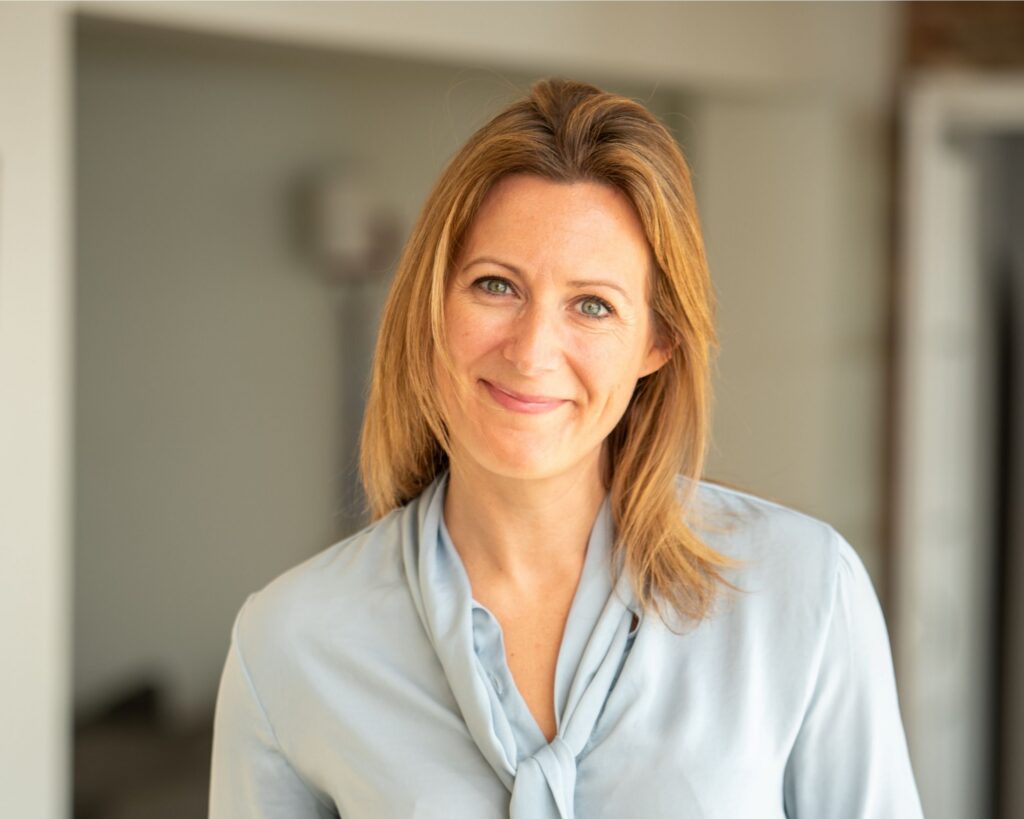
This blog post is written by Sarah Laver.
Sarah Laver is a registered nutritional therapist and former clinical embryologist with eleven years in IVF laboratories. She writes about fertility from the place where the science meets the lived experience of trying, over on Instagram at @the_embryologist_nutritionist.

Listen to Sarah as she chats with Sandra on the Fertility Foundations podcast here